
Modern medicine has made remarkable advances in helping couples achieve pregnancy. But what if, instead of bypassing the reproductive system, we focused first on diagnosing and treating the underlying conditions causing the problem?
The national conversation surrounding infertility and its treatment has been growing in recent years. While a variety of treatment options exist today, including in vitro fertilization (IVF), many approaches focus primarily on achieving pregnancy without first identifying or addressing the root causes of infertility. Patients and physicians alike are often frustrated by this.
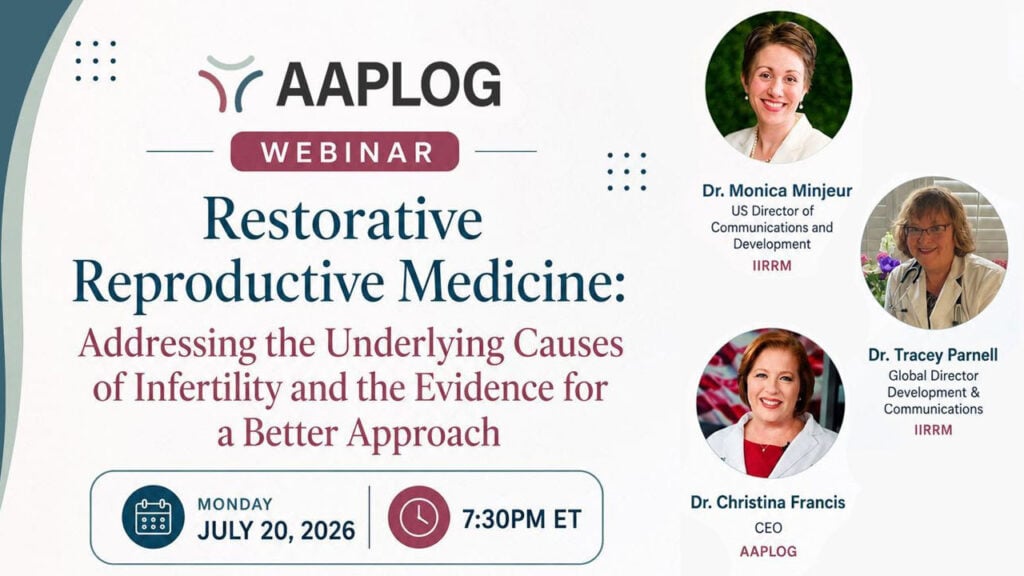
At AAPLOG, we are committed to equipping physicians with the resources and discussions needed to care for our patients in a holistic manner and thoughtfully address these important issues. In our recent webinar, “Restorative Reproductive Medicine: Addressing the Underlying Causes of Infertility and the Evidence for a Better Approach,” Drs. Tracey Parnell and Monica Minjeur explored the principles of Restorative Reproductive Medicine (RRM), how it differs from “traditional” reproductive endocrinology and infertility (REI), and the growing body of evidence supporting this approach.
Infertility and other reproductive disorders deserve an approach that goes beyond masking symptoms and ignoring conditions that could impact long-term health. Restorative Reproductive Medicine seeks to identify, diagnose, and treat the underlying disease processes contributing to infertility rather than working around them. By restoring normal reproductive function whenever possible, physicians can help improve a patient’s overall health while supporting their ability to achieve or avoid pregnancy.
This commitment to treating the whole patient is why AAPLOG recently submitted a comment on the proposed Excepted Fertility Benefits rule. In those comments, we encouraged policymakers to prioritize Restorative Reproductive Medicine, which avoids potential ethical concerns with some assisted reproductive technologies while also leading to better long-term health, and to prioritize funding for it.
When we address the root causes of infertility, in addition to helping families grow, we provide care that is both more comprehensive and more aligned with the goals of good medicine.
If you missed the webinar or would like to watch it again, you can view the recording here. And be sure to join us for our next webinar as we continue exploring timely topics that support life-affirming medical practice.
Check out the International Institute of Restorative Reproductive Medicine (IIRRM) for access to the growing body of medical literature related to RRM as well as information on educational courses available to practicing clinicians. Also, IIRRM’s national conference will be in Orlando in October and will provide an opportunity for further learning on this cutting-edge topic.