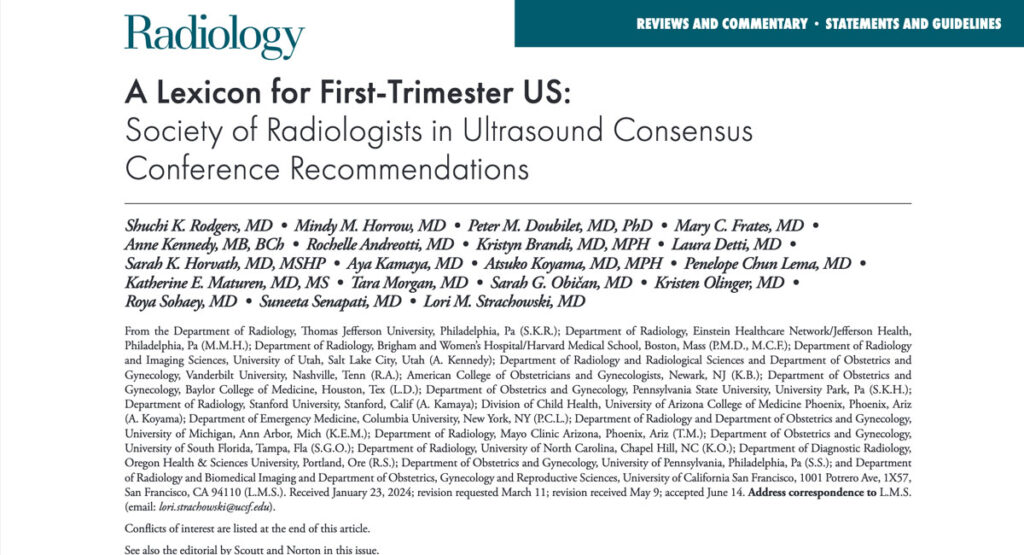
The Society of Radiologists has published a pro-abortion language guide titled “A Lexicon for First-Trimester US: Society of Radiologists in Ultrasound Consensus Conference Recommendations.” This guide suggests language that radiologists can use when describing first-trimester ultrasound images, supposedly offering terms that “(a) are clear, specific, scientifically based, and medically appropriate; (b) are acceptable to imagers, clinicians, and patients; and (c) minimize bias and harm.” In fact, multiple points made in this document explicitly promote a pro-abortion agenda.
For example, the Society recommends against using the terms ‘live’ and ‘living’ on the grounds that “these terms may be appropriated by people outside of the field of medicine to support political rhetoric and proscriptive legislation.” This reasoning clearly prioritizes the interests of a political agenda over a commitment to scientifically sound language. In fact, it is entirely accurate to describe a living embryo as such; whether this term may undermine pro-abortion political goals should not be the concern of physicians. (The Society also argues that these terms “may raise unrealistic expectations for patients facing potential pregnancy loss”, but that argument is incredibly weak as describing an embryo or fetus as currently living does not preclude the possibility that he or she will no longer be living in the near future.)
Similarly, the Society recommends against the use of the term “heart” or “heartbeat” because it “implies a fully formed organ” (not necessarily; organs are often named based on their function rather than their level of development.) Instead, it endorses the term “cardiac activity” — never mind that the term “cardiac” is defined as “relating to the heart.” The Society is following ACOG’s lead in wanting to avoid the term “heart” to deny basic facts about embryo development.
This publication comes shortly after ACOG published an update to its own “Guide to Language and Abortion”, to which we responded in an earlier Member Update. Similar to the Society of Radiologists’ document, ACOG’s language guide claims to promote language that is “medically appropriate, clinically accurate, and without bias”, though in reality, it does no such thing.